Short answer
Treat demo and paid play as two configurations to compare
A slot demo is an instructional client that uses credits without cash value. It can show the layout, controls, paytable, feature order and the settings printed in its own help. It cannot, by itself, prove that a real-money operator deploys the same mathematical build, currency rules, optional modes or jackpot connection.
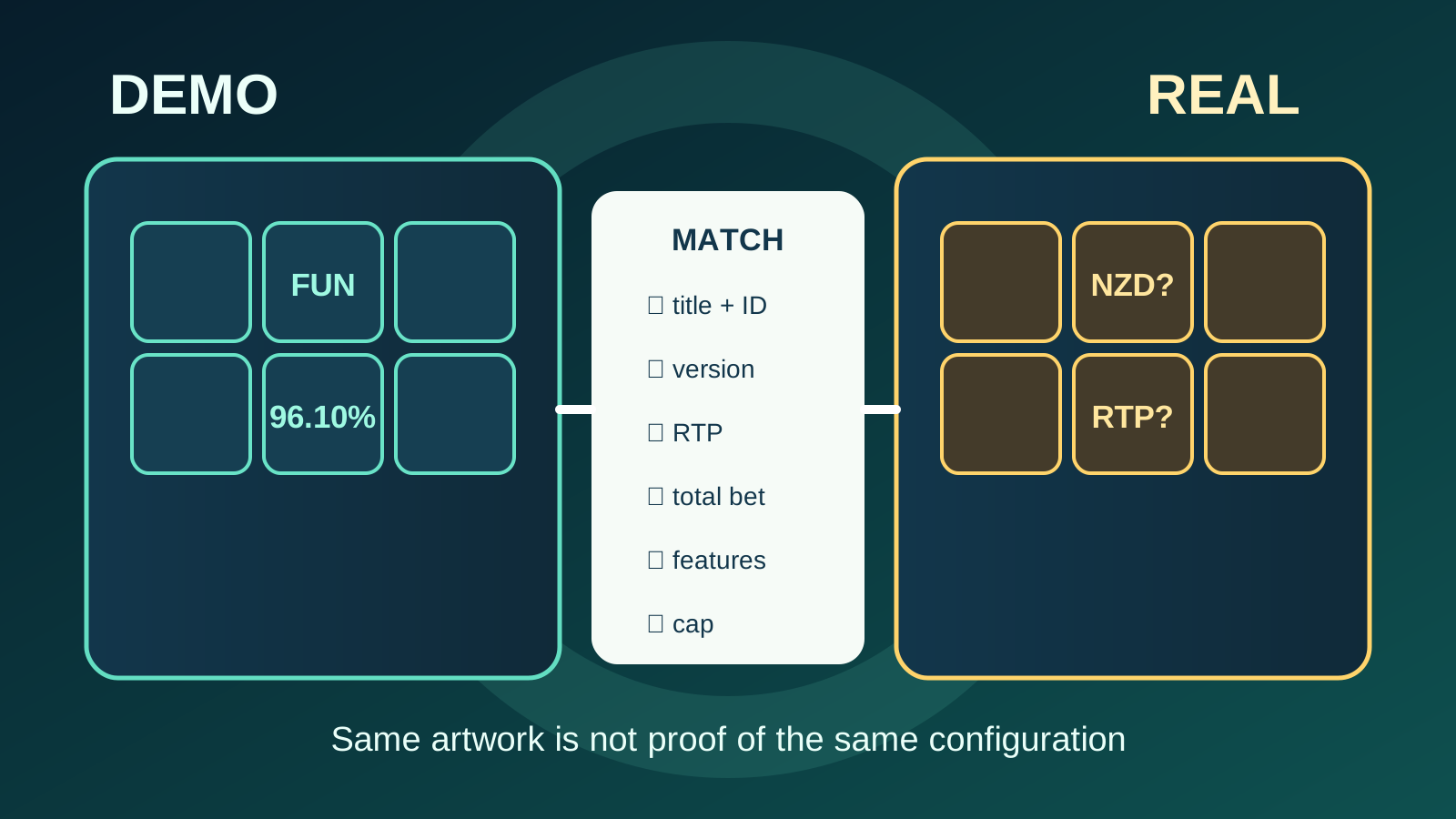
The safe comparison is field by field. Match the full title and edition, developer, game ID or version, help date, RTP, total-stake controls, feature triggers, optional purchases, maximum-win wording and jackpot eligibility. A matching theme or identical reels is not enough because providers can certify several configurations behind the same artwork.
Evolution's official slot material describes its website as a freeplay demo site, explains that demo games cannot award real money and notes that freeplay availability can depend on jurisdiction. That is a useful boundary: freeplay is a learning environment, not evidence of a local cash product.
Do not start from the assumption that all demos differ, either. Many do mirror a production rules build. The point is that identity must be demonstrated through current documentation rather than asserted universally.
- Demo proves
- Its own visible rules
- Demo does not prove
- Operator configuration
- Best identifier
- Live help and version
- Results
- Never predictive
Useful evidence
What an official demo can establish
An official provider demo can establish that the named studio publishes a playable client under the displayed title. When it exposes an information panel, it can also provide a game identifier, rules version, help date, grid, evaluation model, feature wording, active theoretical RTP and maximum-win unit.
The demo is especially useful for understanding interfaces. A reader can find the menu, identify the total-bet display, inspect paylines or cluster rules, see how a feature choice is presented and locate interruption or malfunction terms without placing a cash wager.
It can also reveal evidence gaps. If the help does not print volatility, a fixed cap or a distinct purchase RTP, the correct editorial record is “not stated in the checked help.” The absence prevents a marketing number or secondary review from being promoted into a rule.
Record the demo URL, exact title, provider, game ID, version, help date, displayed mode and inspection date together. A percentage copied without those identifiers is difficult to reconcile when a provider later updates the public client.
Hard limits
What a demo cannot establish
A global provider demo does not establish that an operator accepts a player in New Zealand, holds a particular permission, supports NZD, offers the same game edition or uses the same RTP setting. Publication, distribution, operator inventory and territorial access are distinct claims.
Demo outcomes cannot validate the published RTP. Theoretical return is calculated over the mathematical model's very large horizon. A few hundred fun-credit spins can finish far above or below the design value and provide no reliable estimate of the configured percentage.
A demo also cannot prove that a cash jackpot is funded or available. It may show a sample meter, simulate an award or exclude fun-money actions from eligibility. Real-money contribution, live pool, qualifying stake and settlement need separate operator documentation.
Finally, the absence of account controls from a demo says nothing about the operator's deposit limits, identity checks, withdrawals, bonus terms or self-exclusion. Those controls belong to the account and operator layer rather than the slot rules screen.
Start with the entity
Match title, provider, edition and game ID
Copy the full title including punctuation and suffixes such as Dream Drop, Megaways, Remastered, Ultra or GO Guaranteed. A base game and a jackpot edition can share characters while using different RTP allocation, feature triggers and maximum-win treatment.
Confirm the actual developer, not only the aggregator or casino lobby category. Relax Gaming, for example, publishes its own titles and distributes partner content. The official Own Games catalogue is authorship evidence; a delivery platform label is not.
Look for a machine-readable game ID or build string in the help, launcher or product record. Suffixes can identify market packages, but they should not be decoded into percentages unless the live help explicitly makes that connection.
If demo and paid clients have different identifiers, treat them as separate evidence records even when the title is identical. A difference is a reason to compare rules, not proof that one client is unfair or malfunctioning.
Controlling document
Compare help version, date and wording
Open the information or paytable panel inside both clients. Record the version and rules date where printed. A provider product page may predate a later help revision, while an operator can retain an earlier certified build.
Compare the layout, evaluation rule, trigger thresholds, resets, multiplier combination, retriggers, optional routes and settlement limit. Small wording changes matter. “Multipliers are added” produces a different result from “multipliers are multiplied,” and “three resets” differs from three spins total.
When the help has no date, keep the version plus the inspection date. Do not turn the inspection date into a release date. If it has no version either, capture the title, operator, percentage and screen wording so the record can still be identified.
A current live help file is stronger evidence for the deployed configuration than an undated review or search snippet. If first-party sources conflict, disclose the conflict rather than combining their features into a hybrid game that no client actually runs.
Configuration-sensitive percentage
RTP must be read inside each exact build
Theoretical RTP is the long-run average prize return divided by total stakes for a defined configuration. If a demo states 96.10%, that figure belongs to the demo build inspected. It does not automatically attach to every operator carrying the same title.
Providers can supply alternative return settings. The reels and feature names may remain visually identical while symbol weights or feature probabilities differ. A casino card that copies the provider's highest figure can therefore disagree with its own loaded help.
Compare base play and each optional route separately. An Ante, enhanced spin, feature purchase or jackpot contribution can have its own price and theoretical return. Never average those percentages by eye or assume the most expensive option has the highest RTP.
The related theoretical RTP and house-edge guide explains why the percentage is not a session promise. For this comparison, the key task is simpler: read the exact number in demo help, read it again in paid help and preserve any difference.
Stake identity
Currency, denomination and total bet
A demo may display FUN, credits or a reference euro range, while a real-money client displays NZD or another account currency. The currency label does not change the RTP by itself, but it changes the cash amount represented by the total stake and cap.
Compare total bet rather than one coin or line value. Interfaces can separate denomination, level, paylines and multiplier. Optional modes can add a percentage or replace the ordinary stake with a multiple, so the amount leaving the balance is the relevant exposure.
Check minimum and maximum controls inside the actual operator client. A provider catalogue range is a reference product fact, not a promise that every operator exposes the same denominations or account limits.
Currency conversion can also affect a progressive meter, fixed cash prize or rounding. Do not translate a demo's fun-credit amount into NZD unless the rules define the conversion and the operator presents the corresponding cash value.
Routes alter the comparison
Ante bets, enhanced spins and feature purchases
Optional controls can change total price, trigger probability, starting feature state or theoretical return. Record whether the control exists in each client, its exact cost and the route-specific RTP printed in the help.
A missing purchase button may reflect operator policy or jurisdiction. It does not mean the base game is missing, and it does not justify using a different website to access the feature. Compare the configuration that is actually offered.
Do not describe a purchased feature as “free spins” without acknowledging the upfront debit. Internal spins may not remove another stake, but the entry price can be many times the base bet and can return less than it cost.
If the help states only one whole-game RTP and no separate route percentage, preserve that limit. Do not copy a purchase RTP from another title or infer it from a provider-wide pattern.
Same art can hide changed rules
Feature triggers, resets and settlement order
Compare how features begin: scatter count, full reel, collected symbol, losing-spin counter or random event. Then compare how they continue: fixed spins, resetting respins, cascades, persistent positions or retriggers.
Check the order in which special symbols act. In Money Sleigh, for example, the checked help resolves character actions from top to bottom and then left to right. A different build with another order could produce another final value from similar symbols.
Look for thresholds and termination conditions. Feather Fury ends its Multiplier Re-Spins on the first win, while Freaked out Fish carries multiplier zones between Free Games. Those mechanics cannot be inferred from screenshots or theme.
If the paid client has a feature missing from the demo—or the reverse—record the exact mismatch. Do not assume the omitted section is merely hidden until the title, game ID and complete help have been checked.
A separate service layer
Jackpot connection and real-money eligibility
A demo can explain a jackpot's named tiers and trigger without connecting to a funded pool. The meter can be illustrative, static or supplied by a test service. Real-money eligibility must be confirmed in the operator client.
Compare whether jackpot contribution is inside or added to the total stake, whether fun play is excluded, which bet levels qualify and whether the quoted RTP includes the contribution. A base slot and its jackpot edition should remain separate records.
The current pool is time-sensitive. A value seen on the provider site or at another operator is not the prize shown in the reader's client. Currency, network scope, seed and reset terms also need the deployed rules.
Our progressive versus fixed jackpots guide separates a live pool from a fixed prize and an ordinary maximum-win cap. That vocabulary prevents a demo headline from becoming an unsupported cash claim.
Preserve the provider's unit
Maximum win, recorded maximum and “up to” copy
A hard maximum states the most a round will settle and often explains what happens when accumulated wins reach it. A simulation record reports the largest result observed in a stated test sample. An “up to” product headline may summarise potential without reproducing the settlement rule.
These labels are not interchangeable. If demo help says “maximum recorded win,” keep the word recorded. If paid help states a hard cap, record the cap and its denominator—total bet, coin, feature bet or another unit.
If the current help is silent, write “not stated in the checked help.” Do not import a cap from an older press release merely to fill a comparison table. The gap itself tells the reader what must be checked in the operator build.
Also compare whether reaching the cap ends remaining free spins or other features. Settlement behaviour can matter even when both clients print the same multiple.
Controls can move without changing maths
Mobile layout, autoplay and interface differences
A desktop demo and mobile cash client can place help, paytable, bet and sound controls in different menus. Responsive layout alone does not prove a different mathematical model. Match identifiers and rules before treating a visual change as a configuration change.
Conversely, identical controls do not prove identical RTP. A provider can reuse the same interface assets for several certified return settings. The percentage inside the help remains decisive.
Autoplay, quick spin and stop controls affect presentation or pace where permitted; they do not improve the theoretical return. Faster play can increase turnover per minute and therefore financial exposure even while the stake per round remains unchanged.
If the help text is clipped on a phone, rotate the screen or expand the panel. Do not rely on a lobby card when the full rules are merely harder to reach. An operator should make material game information available before a paid action.
Live-help evidence from one provider
Four examples of why exact configuration matters
The Money Sleigh demo checked for this guide is dated 26 June 2025, v1.0.2. It states 96.00% RTP, details a 100,000-coin limit equal to 10,000x bet and identifies the order in which special symbols act. Those fields form a compact record that a paid client can be compared against.
Feather Fury v1.0.1 states 96.10% RTP and a 5,000x cap. It also defines a ten-consecutive-non-win base counter and a feature that doubles paytable values until the first win. A matching title without that counter would not be the same documented rules build.
Freaked out Fish v1.1.3 prints no help date, but it provides 96.02% base RTP, 96.11% Ante and three purchase returns. It also states a 30,000x cap. The correct record uses the version and inspection date rather than inventing a release date.
Quackin’ Reels v1.0.3 states 96.10% and describes Respins plus additive Multiplier Respins, but it does not print a hard cap or Free Spins section. An older launch article describes more. The current-help conflict shows why copying promotional features into a live configuration can be wrong.
Make the comparison reproducible
What to save in an evidence record
Record the provider, exact title and edition, demo or operator name, URL, game ID, version, rules date, inspection date, displayed currency and total stake. Then add RTP for each mode, feature costs, trigger rules, maximum wording and jackpot eligibility.
A screenshot should include enough context to identify the client. A cropped percentage without title or version is weak evidence because it can be moved between reviews. Store the text transcription with the image so numbers remain searchable.
When fields conflict, keep both records with their source and date. Do not overwrite a real-money figure with the demo's higher value or call the operator figure wrong without confirming the exact certified build.
Recheck before publication and again when a provider updates the help. A source-check date signals when a configuration was observed; it is not a guarantee that the same settings remain active indefinitely.
A separate operator question
Demo access is not operator availability
A provider can make a public fun client available globally while no named operator offers the game to a New Zealand account. Conversely, an operator can carry a production build even when the provider demo is restricted in a visitor's location.
Verify operator identity, current territory terms, age controls, currency, payments, withdrawals, complaints, limits and self-exclusion independently. A New Zealand flag or NZD wallet is not by itself proof of authorisation or of a specific game configuration.
Do not phrase a game review as “available in NZ” unless the named operator route was checked at the time of writing. Even then, availability can change and should remain a dated operator claim rather than a permanent property of the game.
This site keeps game rules and operator evaluation on separate URLs for that reason. One page documents the mathematical product; another can document the service relationship without merging their evidence.
Common shortcuts to avoid
Five assumptions that the evidence does not support
“The reels look identical, so the RTP is identical” is false reasoning because return settings can change behind the same artwork. “The demo paid well, so cash mode will pay” mistakes random history for prediction.
“Fun mode is rigged to win more” and “fun mode is rigged to lose” are both claims that require configuration evidence. A short sample cannot distinguish a changed model from normal variance.
“The provider's highest published RTP must be active” ignores alternative builds. “The product page says up to a large amount, so that is the hard cap” ignores the difference between marketing potential and settlement wording.
“The demo loads in New Zealand, so cash play is legal and available” merges website access, operator status and game configuration. Each part needs its own current source.
Two-client audit
Comparison checklist before a paid spin
- Match the full title, provider and edition suffix.
- Record demo and real-money game IDs or versions.
- Compare help dates and inspection dates.
- Confirm the grid, paylines, ways or cluster rule.
- Copy feature triggers, resets, retriggers and settlement order.
- Read the base RTP in each client.
- Record every optional route, cost and route-specific RTP.
- Compare currency, denomination and total-bet controls.
- Separate hard cap, simulation record and product headline.
- Check jackpot funding and real-money eligibility.
- Verify the named operator and New Zealand access separately.
- Set time and money limits without using demo results as a forecast.
If one field cannot be found, leave it unresolved. A complete-looking table built from assumptions is less useful than an honest comparison showing exactly what the two clients disclose.
Local context
New Zealand checks remain time-sensitive
This guide explains a verification method and does not recommend an operator. New Zealand's online-gambling position and any reform timetable can change, so consult the Department of Internal Affairs and the site's dated legal-status guide at the point of use.
Then apply the configuration checklist inside the operator client. Legal or operator status does not prove a high RTP, and a high RTP does not prove operator status. The two evidence chains should remain independent.
Use account limits, breaks and the contacts in the responsible gambling guide. A demo can reduce uncertainty about controls, but it cannot reduce the financial risk of random paid outcomes.
If the real-money help conflicts with a review, prioritise the deployed rules and preserve a screenshot with the title, version and percentage. That evidence supports a correction without creating a duplicate RTP page for the same game.
Questions answered
Frequently asked questions
Do demo slots use the same RTP as real-money slots?
Sometimes, but not automatically. A provider can supply several builds or RTP settings, and a demo may use one public configuration while an operator deploys another. Check the percentage inside both clients.
Can demo spins predict real-money results?
No. Random demo outcomes do not forecast later paid rounds, and a short sample cannot verify theoretical RTP.
What should match between demo and real-money mode?
Match the exact title, developer, edition, game ID or version, help date, layout, features, RTP, optional modes, maximum-win wording, currency and total-stake controls.
Does a fun-money balance mean a demo is identical to cash play?
No. It only shows that the displayed credits have no cash value. Jackpot eligibility, currency handling, account controls and even the mathematical build may differ.
Does a provider demo prove the game is available to New Zealand players?
No. Provider publication and demo access do not prove that a particular operator accepts a New Zealand account or offers that exact configuration.
Evidence record
Primary sources
Facts and configurations were checked against the following first-party records. A public product page is not proof that a game is available through a New Zealand operator.
- Evolution — official slots and freeplay explanationChecked 6 October 2026
- Relax Gaming — Own GamesChecked 6 October 2026
- Relax Gaming — Money Sleigh official demo help v1.0.2Checked 6 October 2026
- Relax Gaming — Feather Fury official demo help v1.0.1Checked 6 October 2026
- Relax Gaming — Freaked out Fish official demo help v1.1.3Checked 6 October 2026
- Relax Gaming — Quackin’ Reels official demo help v1.0.3Checked 6 October 2026
- New Zealand Department of Internal Affairs — online gambling for playersChecked 6 October 2026