Short answer
Verify the destination before trusting the offer
A fake crypto casino can copy a genuine operator's logo, colours, game thumbnails, terms headings and live-chat widget. It can also use HTTPS, buy search advertisements and display an invented balance. None of those signals establishes who operates the domain or whether a withdrawal can occur.
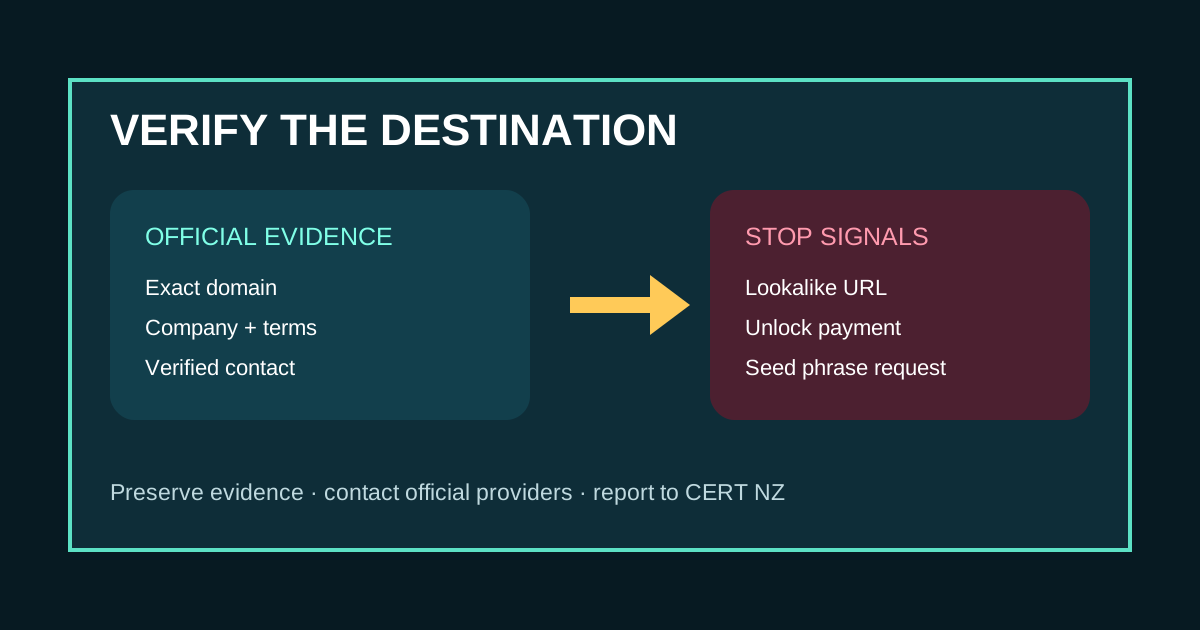
Begin with the exact domain. Reach it from a bookmark you created after independent verification, a regulator record where relevant, or another official channel that does not come from the suspicious message. Compare spelling, subdomain, top-level domain and redirect chain one character at a time.
Then compare the legal company, current terms, country restrictions, support contacts and wallet behaviour. A genuine-looking page that requests a seed phrase, private key, remote-control session or extra payment to release a bonus fails the check immediately.
This guide teaches recognition, evidence preservation and safe reporting. It does not explain how to build a clone, evade filters, manipulate victims or recover funds through unverified “recovery agents”.
Threat model
Impersonation joins a copied identity to a harmful request
The copied identity may be a casino brand, software supplier, wallet, exchange, regulator or support employee. The harmful request can be a password form, wallet signature, token approval, cryptocurrency transfer, app installation or disclosure of identity documents.
Some pages are complete lookalikes. Others are thin “bonus claim” pages that redirect to a wallet connector. A direct message may first build confidence, then send a time-limited link that supposedly activates free credit or solves a withdrawal.
The decisive question is not whether the story sounds possible. Ask whether the requesting domain, company and communication channel are independently connected to the claimed organisation and whether the requested authority is proportionate to the stated purpose.
Scams change names quickly, so a blacklist alone is insufficient. A repeatable verification method remains useful after a specific domain disappears.
Exact-string check
Read the full hostname, not the page logo
Lookalike domains use swapped letters, doubled characters, added hyphens, misleading subdomains and different endings. In an address such as brand.example.invalid, the registrable domain is example.invalid; the word “brand” before it does not make it the brand's property.
Expand the address bar and copy the hostname into a plain text note for comparison. Punycode or visually similar Unicode characters can make two strings look alike. When the browser exposes an ASCII form beginning with xn--, treat it as a reason for careful verification rather than an automatic verdict.
Follow redirects and check the final origin before entering information. A shortened link hides the destination, while an open redirect on a known domain can still end at an unrelated host.
Do not rely on a country-code ending. Consumer Protection New Zealand warns that a local-looking domain alone does not prove a New Zealand business. Identity requires company and contact evidence as well.
Discovery channel
An advert or high search position is not an authenticity certificate
CERT NZ notes that investment and cryptocurrency scam sites can be reached through search results, social-media advertising and direct messages. Placement is distribution, not verification.
Sponsored results can imitate a brand name while sending the click to another domain. Read the displayed destination, then independently locate the organisation instead of assuming the first advert is official.
Search snippets may contain copied bonus wording or old terms. Do not use a snippet as evidence for current eligibility, deposit networks, withdrawal rules or an official app.
If a search result creates urgency—claim today, verify immediately, limited wallet slots—pause. Legitimate account access should still survive independent navigation to the verified domain.
Phishing messages
Verify the account event without using the message link
A phishing email can copy sender names, templates and ticket numbers. The visible sender label is not the technical sending domain, and even a familiar conversation thread can be compromised.
For a claimed login, withdrawal or KYC event, open the known official site separately and inspect the account notification area. Do not call a phone number or open a support chat supplied only by the suspicious message.
Unexpected attachments, password-protected archives and requests to install a “security update” are high-risk. A casino does not need remote desktop access to confirm identity or repair a blockchain transaction.
Preserve headers or the original message when safe, but do not forward a live phishing link to friends. Reporting channels can accept the evidence without creating more exposure.
Invented value
A displayed bonus balance is not proof of withdrawable funds
A fake page can write any number beside “balance”, “profit” or “bonus”. That number may have no corresponding custody account, enforceable contract or blockchain transaction.
Common pressure patterns include a large unsolicited credit followed by a tax, network fee, verification deposit or turnover release charge. Paying once can lead to another invented condition rather than a withdrawal.
Read promotion terms at the independently verified domain before opting in. Identify eligibility, qualifying deposit, wagering rules, game contribution, maximum conversion, expiry and withdrawal effect. If the promotion exists only in a message or cloned page, treat it as unverified.
Never send cryptocurrency merely to “synchronise”, “validate” or “unlock” an off-chain bonus wallet. A legitimate fee explanation must match the actual transaction and destination; the label on a web page proves nothing by itself.
Authority boundary
Classify every wallet prompt before approving it
Connection usually shares a public address and network. A login signature proves control of an address for a message. A transaction can move value, while an approval can grant a contract continuing authority over tokens. These are not interchangeable actions.
Compare the domain shown by the wallet with the verified browser origin. Reject an unexpected chain, recipient, token, amount, spender, unlimited allowance or unreadable payload. The fact that a legitimate wallet app opened does not authenticate the website that summoned it.
No casino support team needs a seed phrase or private key. Those secrets recreate control of the wallet. A one-time code, recovery phrase screenshot or screen-sharing session can also defeat protections.
The site's wallet authentication guide explains connection, sign-in, transactions and approvals in depth. Use it for permission analysis rather than treating this page as a deposit tutorial.
Independent confirmation
Reach support from a channel you verified separately
Do not verify one suspicious channel with another contact supplied by the same page. A clone can control its own live chat, email address, Telegram account and telephone number.
Start from current official terms or a previously verified bookmark. Compare support domains and ticket references. If a social profile claims to be official, look for a reciprocal link from the established website rather than trusting a badge or follower count.
Ask a narrow question without sending secrets: whether the exact promotion URL, application publisher, wallet contract or support identity belongs to the operator. Preserve the answer and date.
A lack of response does not validate the offer. If identity cannot be established before a deadline, let the supposed opportunity expire.
Business identity
Match the domain to the contracting company and terms
Read the legal terms for the company name, registered address, licence claim, dispute route, age rule and restricted countries. Compare those fields with authoritative registers where applicable.
A copied licence logo or number is only a claim until the register identifies the same company and authorised domain. Supplier licences for games do not authorise an unrelated casino operator.
New Zealand access requires its own evidence. A reachable page, NZ flag, NZD option or IP-based welcome message does not prove that current terms permit a New Zealand resident.
The NZ crypto-casino evaluation hub provides the broader operator checklist. This page focuses only on impersonation and bonus-scam signals.
Transport security
The padlock protects a connection, not the business claim
HTTPS means traffic is encrypted between the browser and the domain for which the certificate is valid. Scam domains can obtain certificates too.
Consumer Protection and CERT NZ both caution against using familiar appearance or HTTPS as complete legitimacy evidence. A secure connection to the wrong party remains the wrong destination.
Certificate warnings are serious and should not be bypassed. The absence of a warning, however, is only a basic technical condition and does not validate ownership, solvency or withdrawal terms.
Treat HTTPS as one layer: first exact domain, then company identity, current terms, requested permissions and independent contact evidence.
Software and messaging
A casino app or bot needs its own provenance trail
A clone may push an APK, desktop installer, browser extension or mobile configuration profile. Installing it can expose credentials even if the web page is later closed.
Verify the official distribution route, publisher identity, package name, signing information and update mechanism. Do not enable installation from unknown sources merely because support describes the package as a regional version.
Telegram bots and channels can copy names, avatars and member counts. The Telegram casino identity guide covers bot handles, linked domains and custody boundaries.
The casino app provenance guide covers stores, APKs and signatures. Those detailed checks stay on their owner pages rather than being duplicated here.
Preservation
Save context without spreading secrets
Record the full URL, date and time, redirect chain, visible claim, sender details, transaction identifier and how the page was discovered. A screenshot should include enough browser context to identify the origin.
Do not publish seed phrases, private keys, one-time codes, identity documents, full card details or active session tokens. Redact personal account data before sharing evidence outside a verified reporting channel.
If possible, save the suspicious message in its original form and note the advert platform or search query. Do not keep interacting solely to collect more proof.
Blockchain transaction IDs are public and useful, but they can link addresses and balances. Provide them only where relevant and understand that reporting them may connect activity to your identity.
Credential response
If you entered information, contain the exposure first
Close the suspicious page and use a clean, updated device to reach the genuine service independently. Change any reused password and use a unique replacement stored in a password manager.
Enable strong multi-factor authentication, preferably a phishing-resistant method where available. Review active sessions, recovery contacts, API keys, withdrawal addresses and account changes.
If a wallet was connected, disconnect the site and separately review on-chain approvals. Disconnection does not automatically revoke token allowances. If a seed phrase or private key was disclosed, treat the wallet itself as compromised and seek guidance from the verified wallet provider.
Run security updates and a reputable malware scan if software was installed. Do not accept help from an unsolicited recovery account that asks for remote access or another payment.
Financial response
If money moved, contact real providers quickly
Contact the bank, card issuer, exchange or wallet provider using contact details from its official app, statement or verified website. Explain the transaction and follow its fraud process promptly.
Cryptocurrency transfers may be irreversible, but prompt reporting can still support account controls, exchange tracing, address warnings and wider disruption. Do not pay a second fee to a stranger promising guaranteed recovery.
Preserve transaction hashes, destination addresses, asset and network, amount, timestamp and related communications. Do not send a test payment to confirm that the recipient can return funds.
If identity documents were exposed, ask the relevant New Zealand organisations about identity-fraud protections. Keep a dated log of every contact and reference number.
New Zealand route
Report verified phishing and crypto-scam evidence to CERT NZ
CERT NZ accepts reports about online incidents. Its reporting information explains that verified phishing domains may be listed and takedown requests sent, so a report can help beyond the individual case.
CERT NZ's cryptocurrency-scam advisory recommends reporting suspicious sites and contacting the bank through official channels after harm. Consumer Protection NZ also publishes scam-identification and online-shopping checks.
For immediate danger or suspected crime, use the appropriate New Zealand emergency or Police route. For account-specific losses, the financial provider's fraud team remains important.
A report is not a promise that funds will be recovered. It creates an evidence trail and can contribute to domain disruption, warnings and investigation.
Worked verification
How to assess a “200% bonus unlocked” message
Suppose a social advert uses a known casino logo and promises a bonus at a hyphenated domain. First record the advert and hostname without logging in. Compare the exact domain against independently reached official terms.
If the domains differ, do not use the clone's chat to resolve the conflict. Ask verified official support whether the promotion URL belongs to it. Compare the legal company and promotion terms.
If the page then displays a large balance and asks for a crypto payment or wallet approval to release it, no independent evidence has established that the balance exists. Reject the request and preserve the destination address or spender details without authorising them.
Report the advert and domain to the platform and CERT NZ. If credentials were entered, complete the containment steps immediately rather than waiting for a reply from the fake page.
Two-minute audit
Fake crypto casino verification checklist
- Read the full registrable domain and every redirect.
- Reach the claimed operator independently.
- Match legal company, terms and official contacts.
- Do not treat HTTPS, an advert or a badge as identity proof.
- Verify the promotion in current official terms.
- Classify wallet prompts before approving anything.
- Never disclose a seed phrase, private key or one-time code.
- Reject remote access and unknown software packages.
- Preserve non-sensitive contextual evidence.
- Contact real financial providers quickly after exposure.
- Report suspicious domains and messages to CERT NZ.
- Ignore unsolicited recovery services and new fee demands.
Evidence boundary
No single signal proves authenticity or fraud
A young domain, privacy-protected registration, foreign company or negative review can add context but is not conclusive alone. Conversely, an old domain, valid certificate or professional design does not prove safe custody.
This checklist cannot inspect a private account, authenticated cashier or wallet prompt on the reader's device. It therefore avoids declaring an unnamed operator genuine from surface signals.
Country rules, domains and support channels change. Record the date of every check and repeat verification before a new payment or permission request.
The guide is security information, not legal advice or a recovery guarantee. Use current official New Zealand reporting and financial-provider channels for an actual incident.
Questions answered
Frequently asked questions
Does HTTPS prove a crypto casino is genuine?
No. HTTPS encrypts the connection to the domain you opened; a scam domain can also obtain a certificate. Verify identity separately.
Is a bonus wallet balance proof that funds exist?
No. A number displayed by a website or bot is not independent proof of custody, withdrawal rights or an on-chain asset.
Should support ask for a seed phrase to restore a casino wallet?
No. A seed phrase or private key controls the wallet and must never be shared with casino support.
What should I do after entering a password on a fake site?
Stop using the page, change the affected password from the verified official site on a clean device, enable strong MFA, review sessions and contact the legitimate provider.
Where can New Zealand users report a phishing casino site?
CERT NZ accepts reports and can use verified phishing-domain information in disruption and takedown work. Financial loss should also be raised promptly with the bank, exchange or wallet provider through official channels.
Evidence record
Primary sources
Facts and configurations were checked against the following first-party records. A public product page is not proof that a game is available through a New Zealand operator.
- Own Your Online NZ — keeping cryptocurrency secureChecked 7 October 2026
- CERT NZ — report an issueChecked 7 October 2026
- CERT NZ — blocking investment and cryptocurrency scam websitesChecked 7 October 2026
- Consumer Protection NZ — check before you buy onlineChecked 7 October 2026
- Consumer Protection NZ — identify a scamChecked 7 October 2026